The Jeans That Outlive Us
April 27th, 2026
Kate Wuepper
Graphics by Lila Garwood
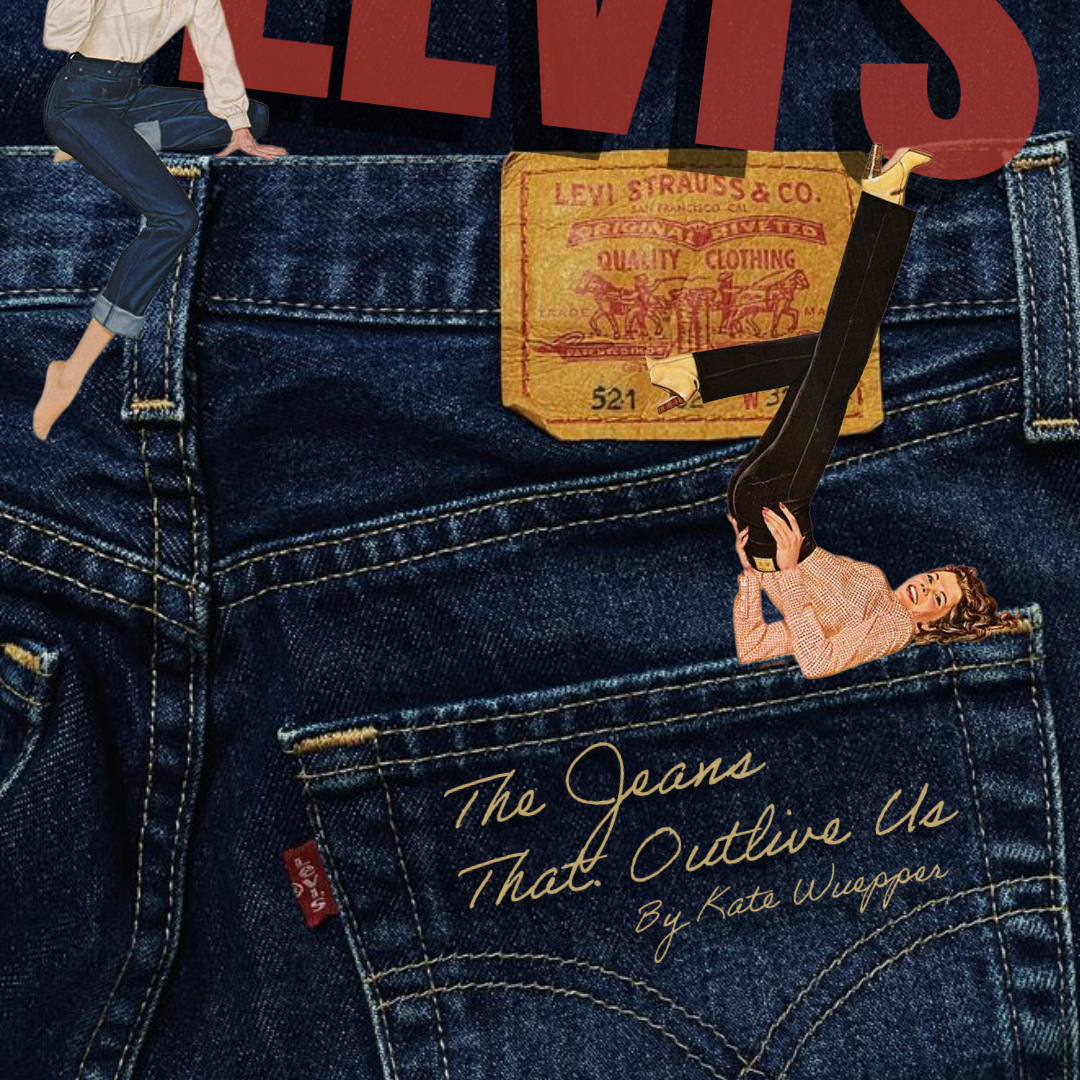
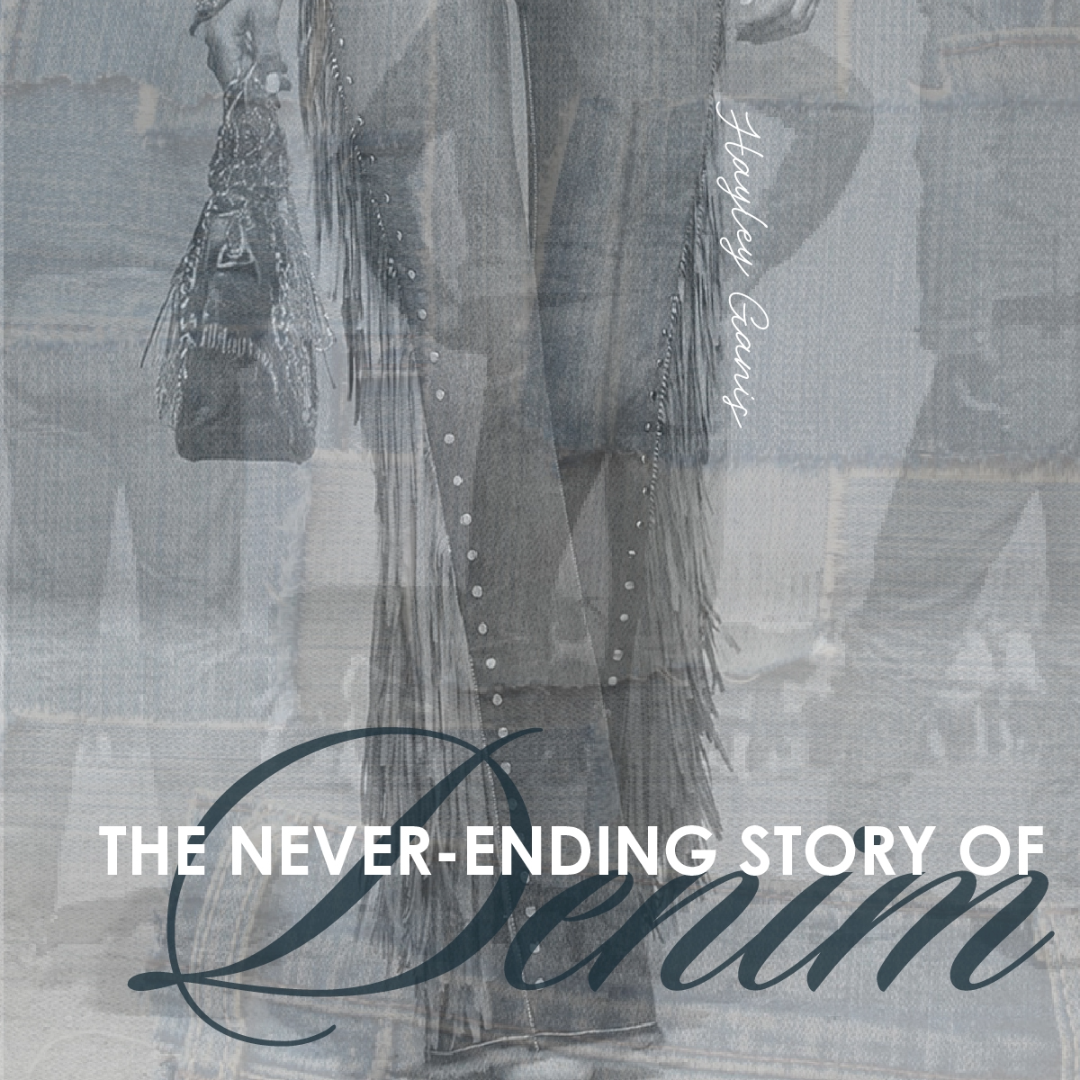
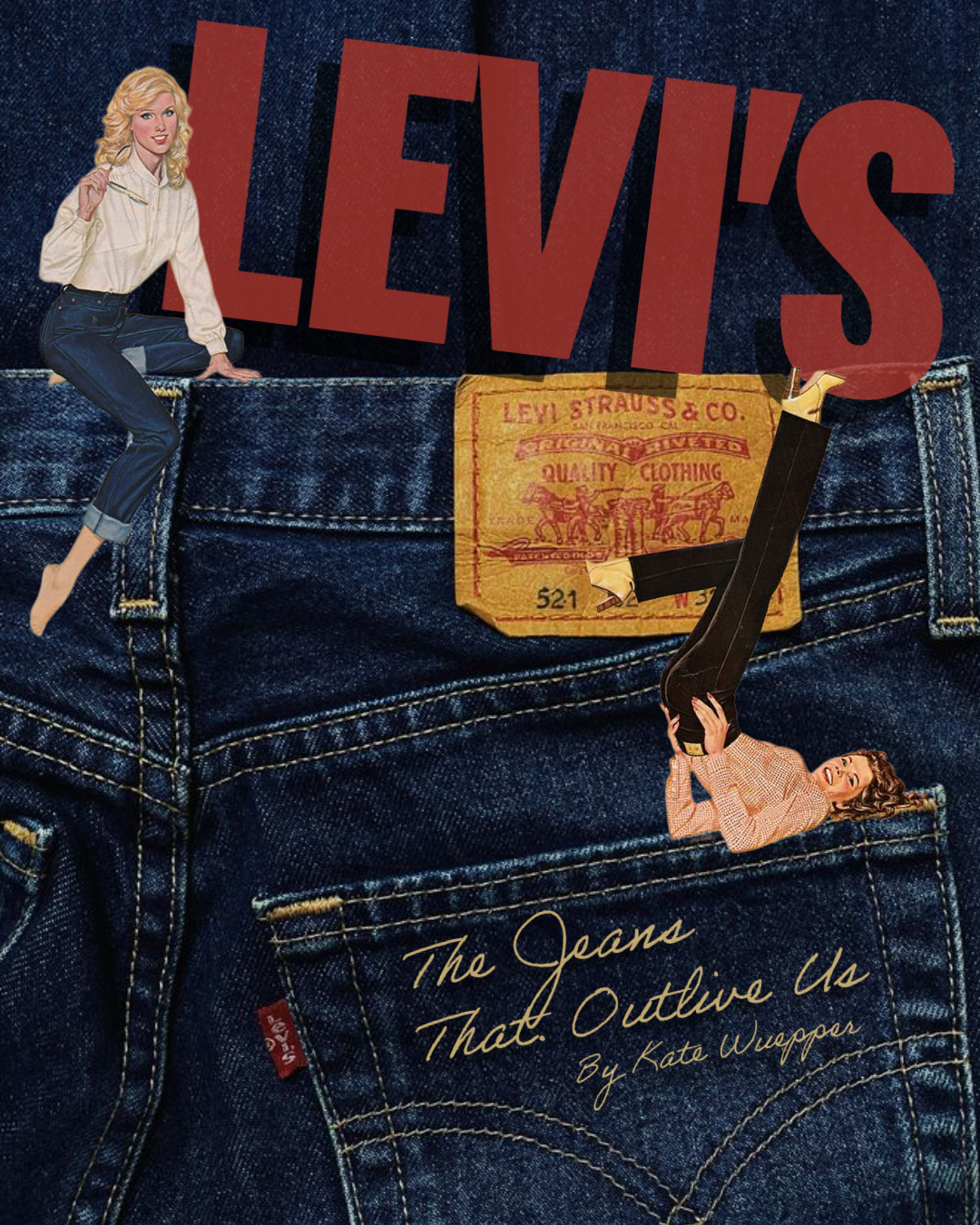
Reinvention has always been the promise of fashion. New seasons, new silhouettes, new trend obsessions, new persona. Only select pieces are capable of resisting that cycle. The Levi’s 501 jeans are perhaps the clearest example. Introduced in 1873 as durable workwear, the straight-leg, button-fly denim has survived over a century of cultural disruption without fundamentally changing its design. Historically, fashion tends to thrive on novelty, however, the 501 lives on through the flexibility of its wear. It remains fundamentally constant, while the meaning and world around it evolve.
The 501 originally stemmed from a practical problem. During the California Gold Rush, laborers lacked clothing and work pants that could withstand long days of physical exertion. In 1873, Levi Strauss and tailor Jacob Davis patented riveted denim pants designed to reinforce those points of strain. The design later became known as the famous 501, a style that is now one of the longest-running garments in modern fashion history. The Smithsonian Institution notes that the riveted work pants transformed everyday labor clothing into one of the most influential garments ever produced.
The silhouette itself has never needed reinvention. Its utilitarian design prioritizes longevity and ease, and that functional simplicity alone is what makes it timeless. Each era reshapes what the 501 represents without altering the garment itself. The same jeans worn by miners and railroad workers in the 19th century were later adopted by rebellious teenagers in the 1950s. Denim quickly became shorthand for youth rebellion and working-class authenticity. The 1990s minimalist wave provided the Levi’s 501 with yet another cultural life, turning the simple denim cut into an everyday essential. Today, the same jeans circulate through resale platforms and vintage shops as archive pieces, valued less for their newness and more for the years already worn into them. The endurance of the 501 lies in its modifiability—it functions like an open framework, allowing each generation to attach its own meaning to it.
In this case, scarcity was not engineered through limited releases or marketing tactics. It was developed gradually through survival. Pre-1980s US-made 501s often resell for more than contemporary pairs– selvedge denim with specific washes and stitching– can no longer be replicated. Their value was not manipulated through limited drops; it accumulated over time and through surviving cultural shifts.
For Levi’s, durability is not just a design feature – it is a business strategy. The brand regularly returns to its archive, reviving heritage profiles to reinforce the identity that has defined the company. When denim trends begin to reset, Levi’s leans on its historical foundation as a reminder to consumers that the most enduring pieces rarely require complete reinvention.
The company has also embraced the resale economy. Through “Levi’s SecondHand,” a platform dedicated to buying and reselling previously worn pairs, the brand formalizes something denim culture has long practiced: jeans continuing their lifecycle after their first owner. Instead of treating wear as a flaw, the resale model treats it as proof of authenticity.
This approach aligns with ongoing conversations regarding sustainability. The fashion industry produces vast amounts of textile waste each year, largely driven by rapid trend cycles and disposable clothing. A piece of clothing capable of lasting decades challenges that system, allowing longevity to carry environmental value.
Fashion tends to rely on constant rebirth. New silhouettes replace old ones, and trends cycle through wardrobes. The Levi’s 501 design remains steady while its environment repeatedly finds new ways to interpret them. A parent’s 501s can reappear years later as their child’s vintage staple, not because they were kept stored in pristine condition, but because they were lived in. The jeans become less like a product and instead more like a record. Nearly 150 years after its introduction, the same pair of denim jeans continues to last. If fashion is defined by originality, what does it mean when the most enduring piece refuses to evolve at all?
“Each era reshapes what the 501 represents without altering the garment itself.”
More from this edition
Featured