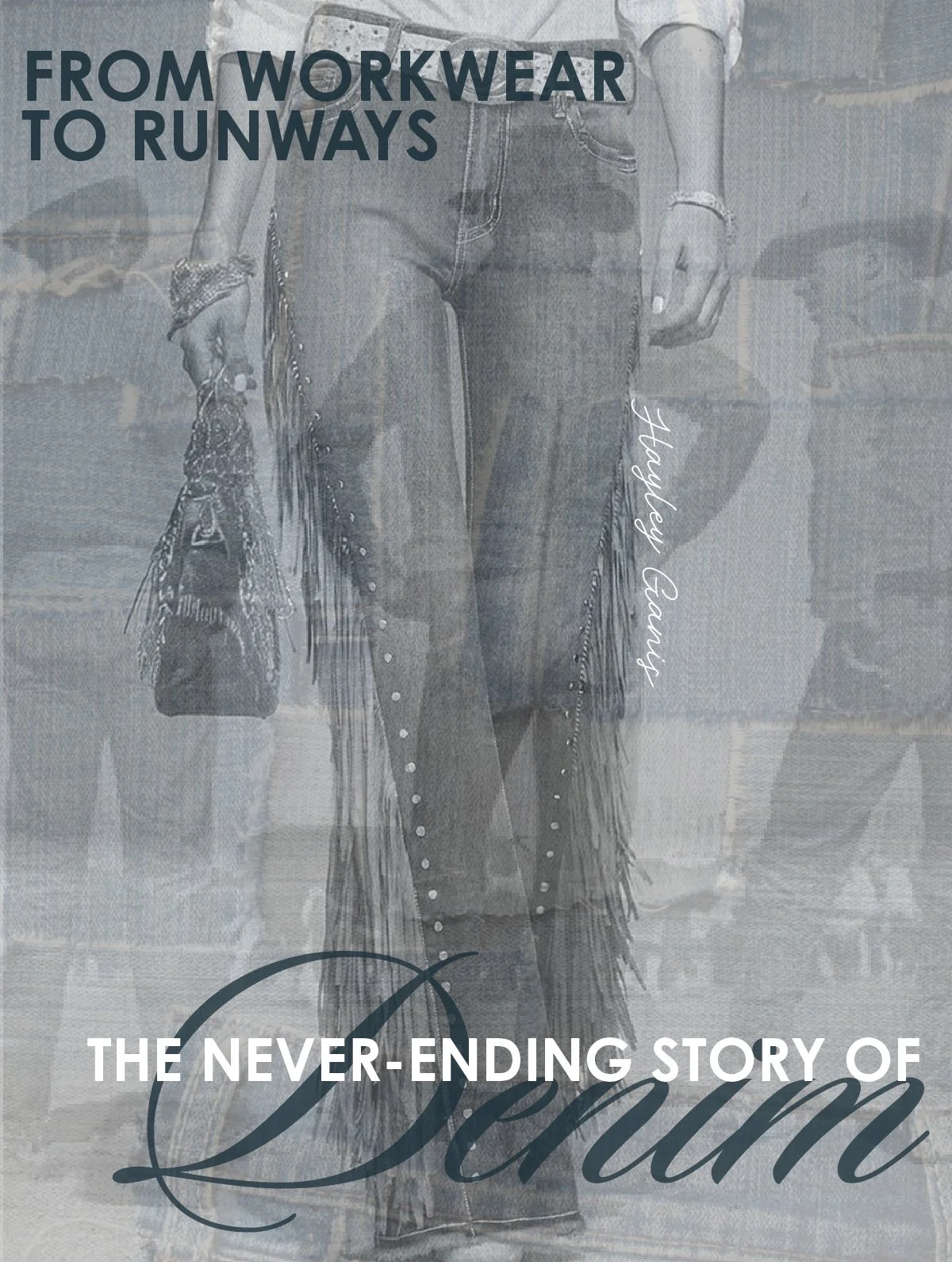
From Workwear to Runways: The Never-Ending Story of Denim
April 27th, 2026
Hayley Ganis
Graphics by Adelaide Feeley
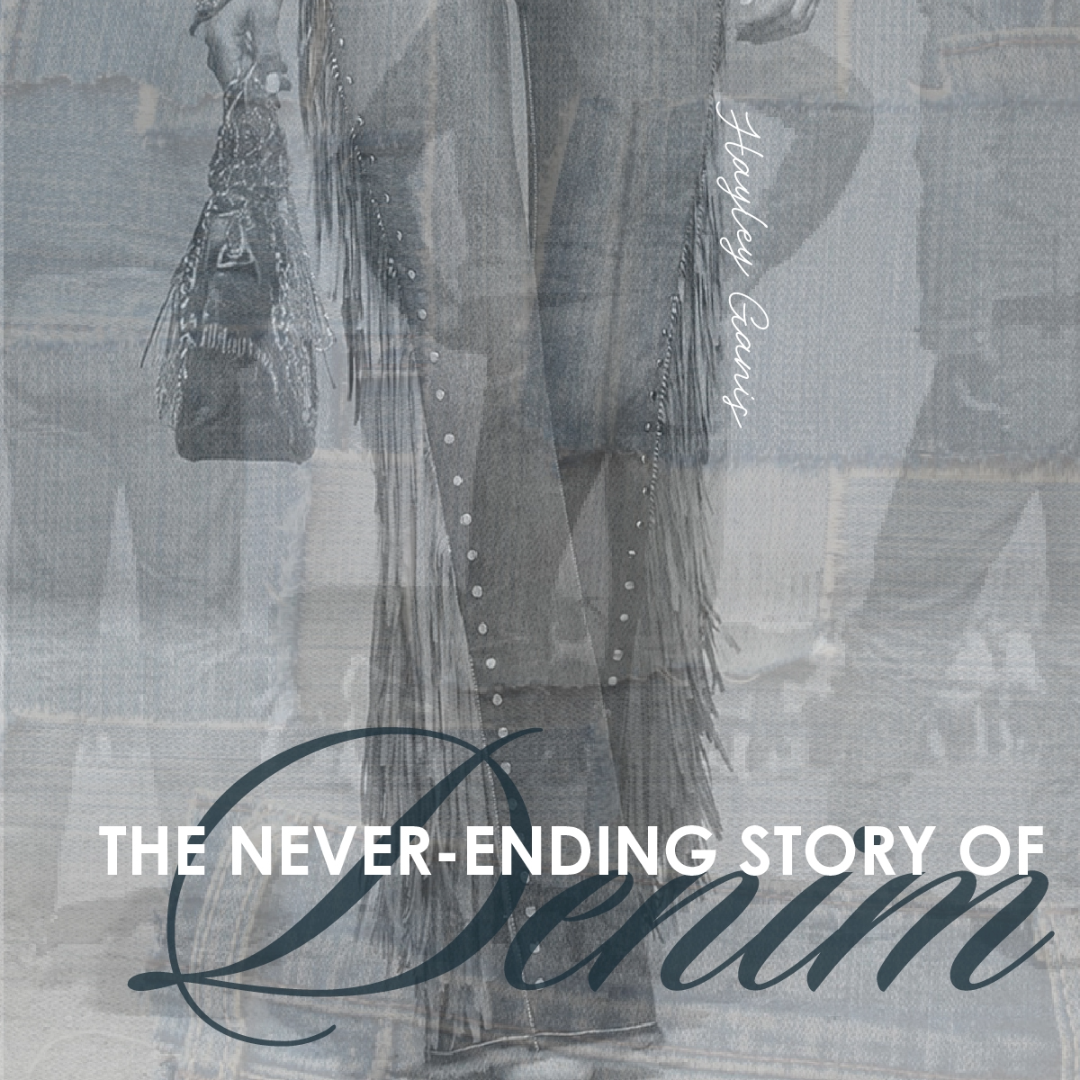
Few fabrics have shaped fashion quite like denim. Throughout fashion history, denim has influenced and symbolized cultural expression, rebellion, labor, luxury, and even political trends. It has taken on a role larger than just a fabric; denim has remained immortal throughout fashion history, no matter the trend, culture, or history. The fabric is permanently woven into our global and national culture and identity.
While denim today is a popular and readily accessible material, it was originally a luxury item. Originating in the 17th-century Mediterranean, denim began as a sturdy fabric called "serge de Nîmes" in Nîmes, France. India became the primary manufacturer and trader of the fabric. While denim today is widely accessible for all audiences, it used to be an expensive luxury, available for only the wealthy and powerful in global markets.
European weavers made the distinctive “denim” look by dying the warp (vertical) threads blue and leaving the weft (horizontal) threads white. Denim remained a luxury commodity until the Portuguese explorer Vasco da Gama discovered a sea route to India in 1497, allowing denim to enter the markets of other colonies. Since importers could now avoid the heavy duties imposed by Indian manufacturers, European denim production and usage surged.
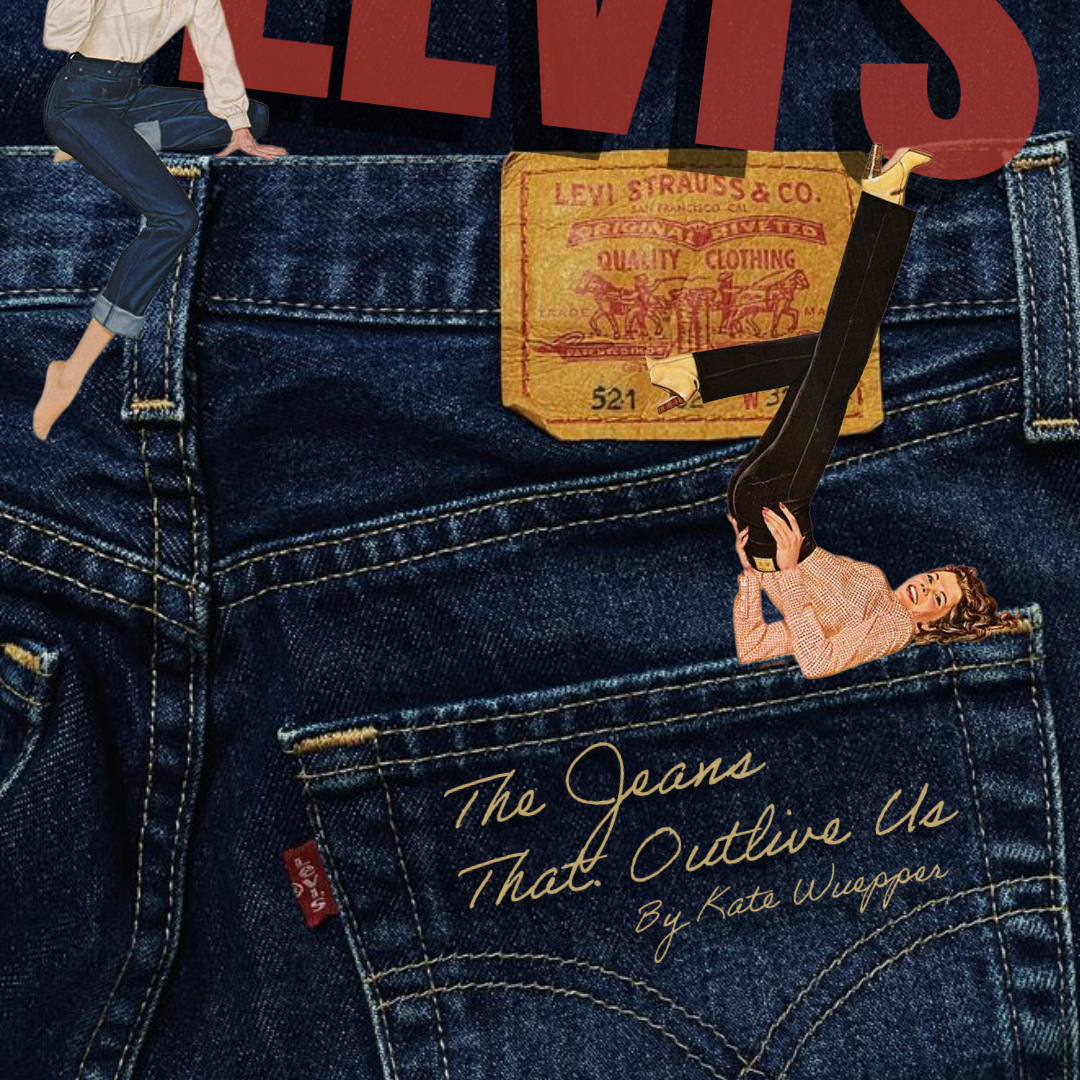
Denim eventually lost its ‘luxury’ appeal in the 1870s as indigo dye became more accessible and the fabric was adopted as “workwear”. In 1873, Levi Strauss notoriously popularized denim in America as a cheap yet durable fabric when he patented and produced the first denim jeans. The later development of synthetic indigo made the process of mass-production that much easier. Denim became much cheaper and more reliable to produce, offering increased durability and permanence that shape denim as we know it today. Throughout the 20th century, denim became a staple in railways and military uniforms. During World War II denim was labeled an “essential commodity” and reserved primarily for military use. By this point, denim had become a marker of resilience, built to last physically and societally.
The humble denim jean did not shed its industrial connotations until the 1950s, when Hollywood redefined it as a highly stylized, youthful fashion statement. Teenagers and young adults idolized movie stars such as James Dean and Maryilyn Monroe in cult films like Rebel without a Cause, and adopted denim as a symbol of personal and cultural rebellion. For instance, college students started wearing denim to protest against the Vietnam War, while young delinquents, clad with slicked back hair and motorcycles, adopted denim as a symbol of rebellion. Fearing cultural and fashion changes unaligned with traditional values, many U.S. schools banned students from wearing denim. Yet, despite society’s best efforts, nothing could slow denim’s momentum.
In the 1960s and 1970s, denim became a symbol of individuality within counterculture, worn at protests, parties, and youth events. Women embraced new denim styles with slimmer waists, bell-bottoms, incorporating detailed, feminine finishes. Icons like Steve McQueen and Paul Newman helped establish denim’s “rugged cool” image, particularly through the denim jacket. Soon enough, denim began to seep into unconventional markets. Sneakers, belts, tote bags, furnishings; almost anything a shopper could picture having denim adopted the fabric. Even automobile manufacturers, beginning with American Motors Corporation, offered denim-inspired interior finishes.
With denim's growing popularity, it was only a matter of time before it made its way into high fashion. Beginning in the 1980s, brands such as Calvin Klein and Armani launched designer, premium denim, popularizing new styles such as the “slim fit” and “acid wash.” Designers used denim to create jeans, shorts, jackets, tops, and accessories in a range of styles and moods, showing how this enduring fabric could simultaneously promote quiet sophistication and loud individual expression.
In the current age of daring textile innovation and “vintage” finishes, denim still has many chapters of its story left to write. Due to its timeless and versatile nature, denim will never go out of style or stop evolving; it will continue to adapt to new trends, cultural shifts, and social movements to reflect societal values and fashion.
“Denim has remained immortal throughout fashion history, no matter the trend, culture, or history.”
More from this edition
Featured