The Timeless Art of Privacy
April 27th, 2026
Maya Chertorisky
Graphics by Ananya Jain
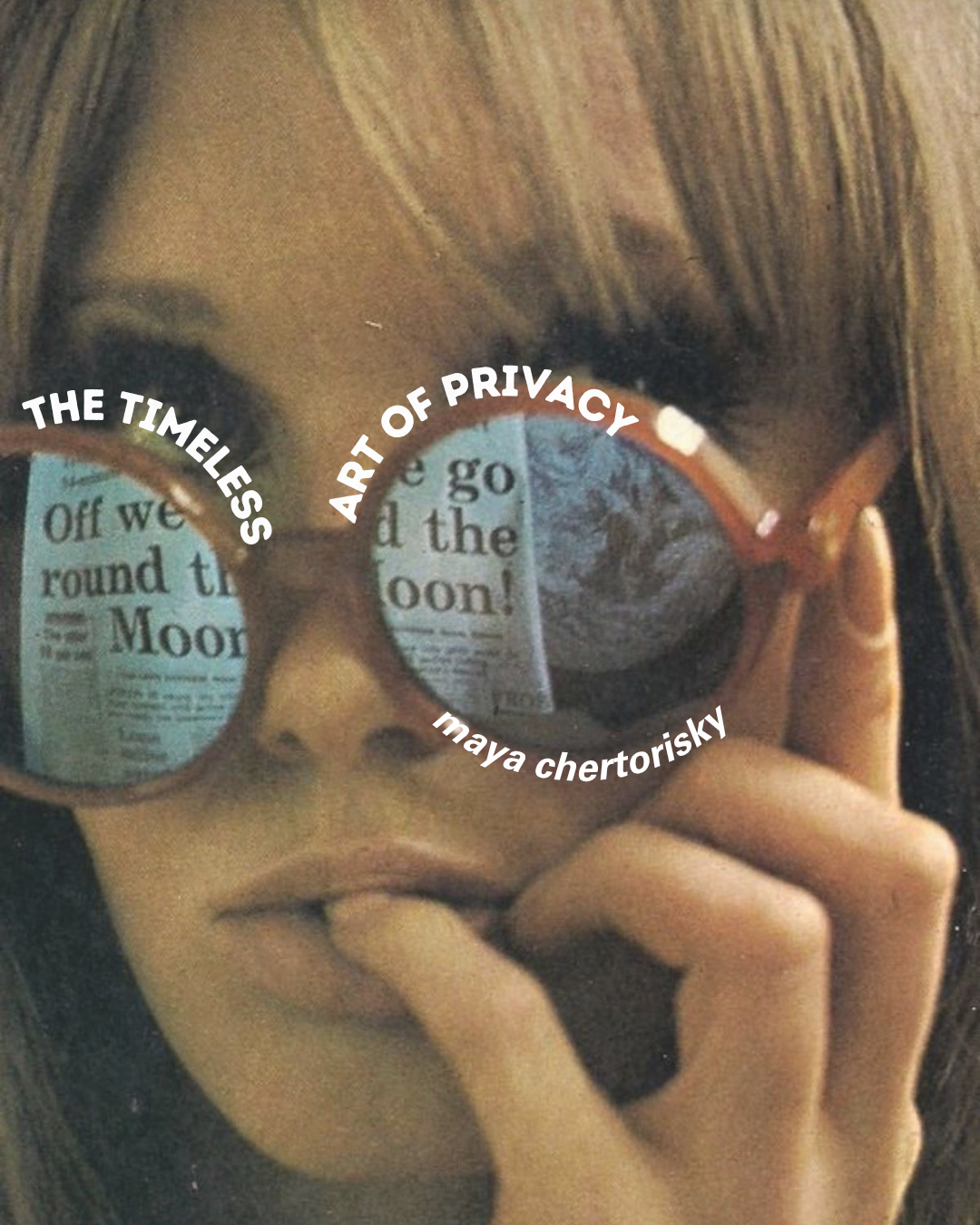
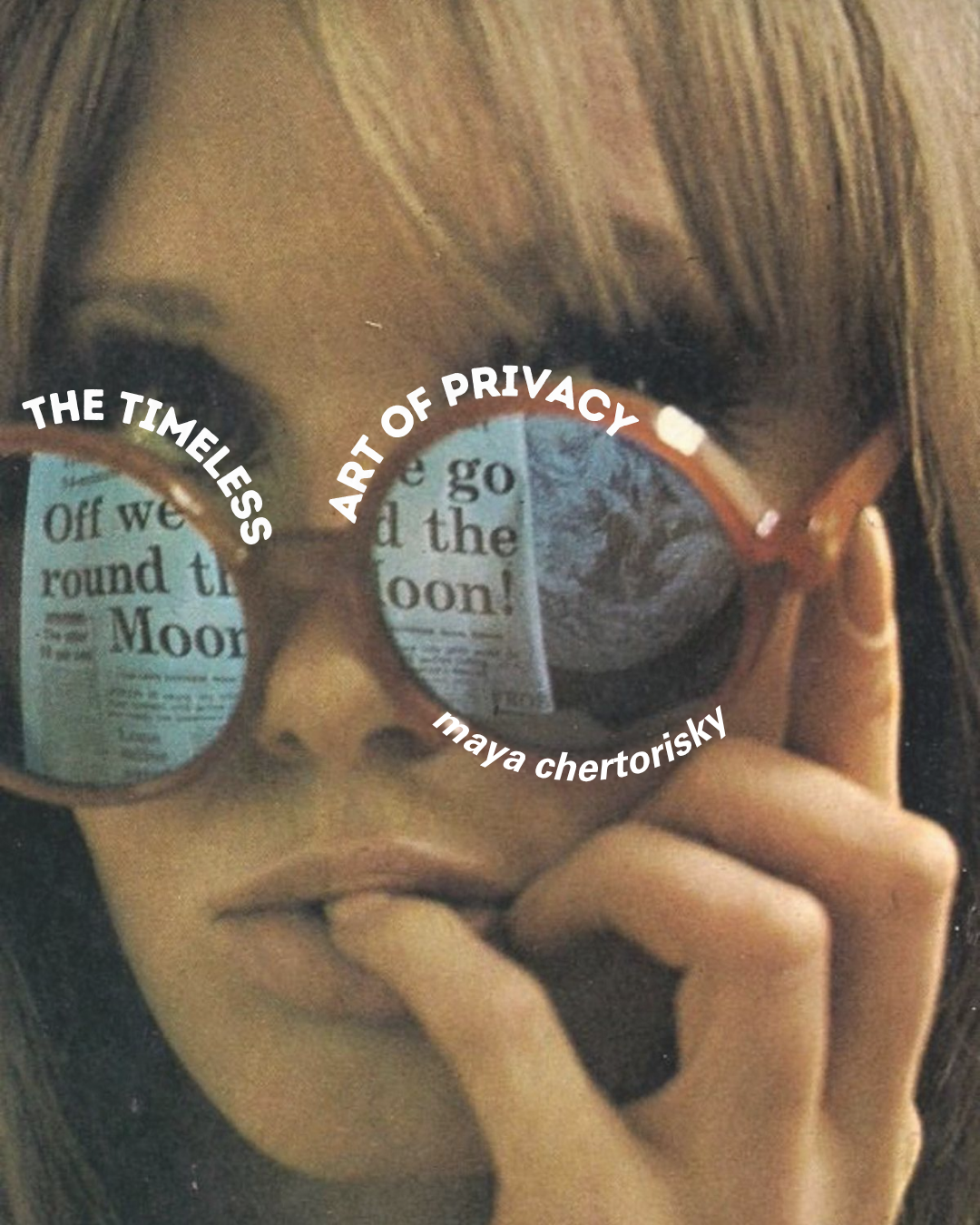
Sunglasses are timeless. While fashion trends come and go, sunglasses remain with their traditional use but with a change of color and shape.
Sunglasses were meant for pilots. The Aviator sunglasses, meant for pilots, represented authority and power after the use of the same by General MacArthur and later by Tom Cruise while playing the role of a protagonist in the movie "Top Gun." They found their way into the mainstream media after actors and actresses were spotted wearing them while going out in public places to remain incognito and escape the attention of photographers and fans. In the process, they created a powerful symbol. When Audrey Hepburn donned oversized black sunglasses while playing the role of a protagonist in the movie "Breakfast at Tiffany’s," sunglasses came to be equated with elegance and sophistication. At the same time, James Dean and Bob Dylan were spotted wearing Ray-Ban wayfarer sunglasses, which came with rebelliousness.
As these images began circulating through magazines and film promotions, sunglasses now carry a new meaning. It is no longer a means to regulate the sun’s rays. It has become a symbol of celebrity remoteness, enigma, and power over being seen.
This symbolization continues to remain relevant in today’s world too. Kurt Cobain’s white oval sunglasses are an ironic symbol of grunge culture in the 1990s. Keanu Reeves’ slim black sunglasses in The Matrix film propelled futuristic micro-lens sunglasses to center stage. Recently, Bella Hadid’s and Hailey Bieber’s skinny oval sunglasses are a revival of the minimalist style that dominates current social media fashion trends. While sunglasses themselves are never out of style,they are constantly reinvented. Each generation tries to innovate sunglasses to match their style and sense of aesthetics.In the 1950s and 1960s, the angular style of wayfarer sunglasses was in fashion and had become an icon of the times. In the 1970s, oversized sunglasses were in fashion, matching the glamour and boldness of the times. Today, fashion has moved back to slim oval and micro sunglasses.
The style evolves with time, but the message remains the same. They allow celebrities to be visible on their own terms—present, but not fully accessible.
While sunglasses may be said to be glamorized by the influence of Hollywood and other celebrities, the true power behind sunglasses as an accessory derives from something far more fundamental. Sunglasses, in fact, exploit one of the most critical elements of human interaction—eye contact. This, in turn, gives rise to an asymmetry in social interaction. The wearer of the sunglasses has the power to observe others without necessarily being observable themselves.
Sunglasses, in effect, are like technology that helps people control their visibility in public space. They are used by celebrities to protect themselves from the paparazzi, by people in general to create a small psychological barrier in crowded public space, and by influencers as part of their look of effortless detachment. In each case, sunglasses are not just something that people wear to look nice, but are, in effect, an instrument that helps them control their visibility to others.
This process of reinvention, which sunglasses are constantly going through, is exactly what keeps them relevant. Sunglasses may go in and out of style, but they will continue to rebrand themselves to fit each style, maintaining their functionality. As long as we are living under the sun and want to look fashionable in public, sunglasses will continue to evolve without ever falling out of style.
“The wearer has the power to observe others without necessarily being observable themselves.”
More from this edition
Featured